
Curator’s Notebook: Gilda Pervin, Of Time and Memory
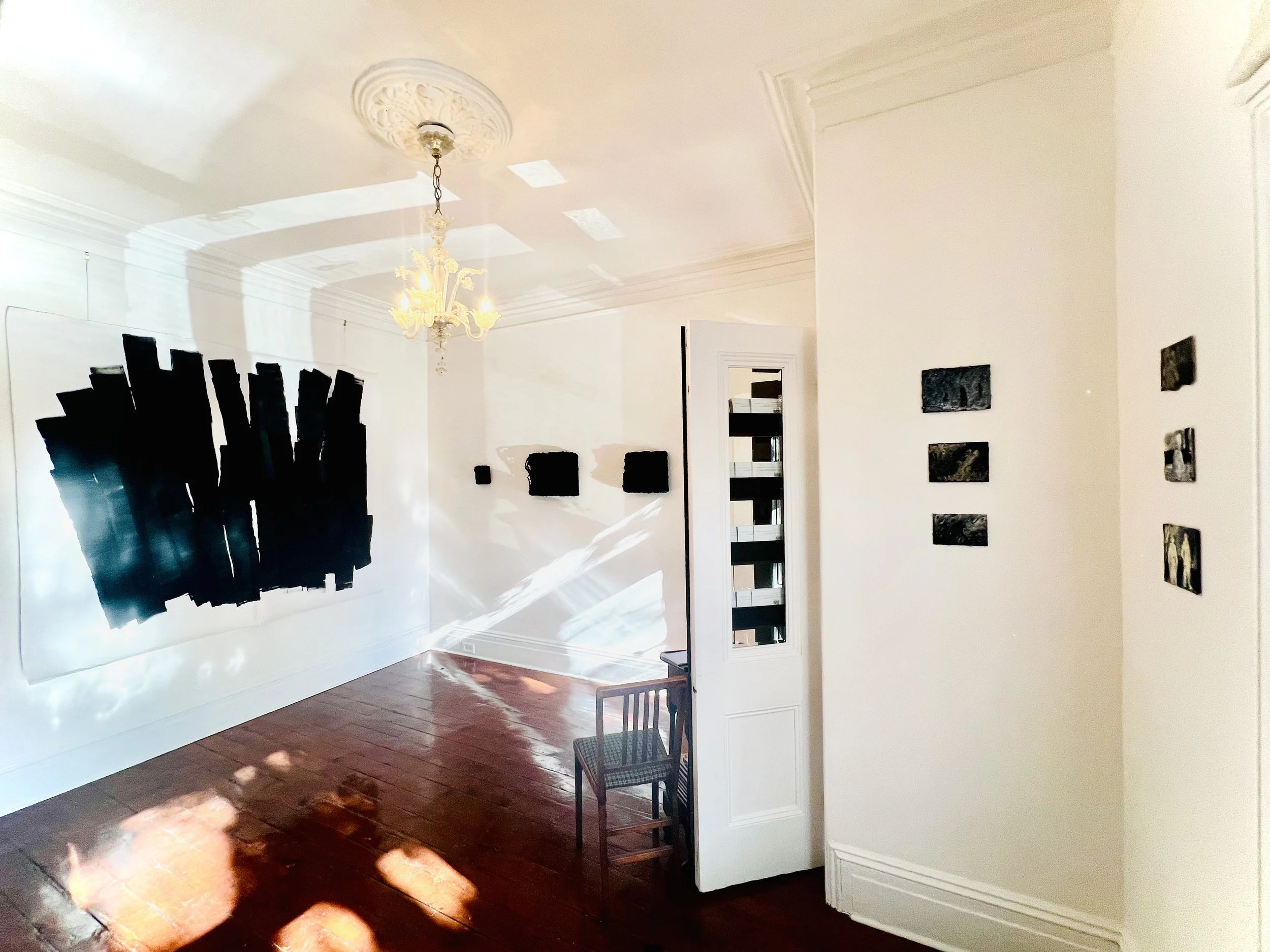
Installation view of “Gilda Pervin: Of Time and Memory” at Curious Matter.
At Curious Matter, we’ve long believed that exhibitions deserve more than a fleeting moment; they deserve a record. As traditional arts coverage continues to dwindle, we’re expanding our own platform to include Curator’s Notebook, an ongoing series offering reflections, behind-the-scenes insights, and broader context for the exhibitions we present. These writings aren’t reviews and they aren’t essays; they are glimpses into the processes and encounters that shape our work with artists and audiences. We offer them as a way of honoring the art and the people who make it, while preserving the lived experience of each exhibition for our community and for the future.
Curator’s Notebook: Gilda Pervin, Of Time and Memory
Following whatever logistical mounting issues, challenges of scale within our intimate space, or other technical obstacles that may confront us in the process of a Curious Matter installation, there are exhibitions that ultimately settle into the gallery with a particular gentleness and grace — that seem to breathe within our walls. “Gilda Pervin: Of Time and Memory” was one of those exhibitions. A particular pleasure of hosting this show was watching the work in the shifting light of the gallery: early morning glow giving way to the sharp glare of winter afternoons and settling into evening. As the light changed, shadows gathered in the recesses of the sculptures and highlights traveled across surfaces that revealed themselves slowly. It felt appropriate for work so deeply attuned to time.
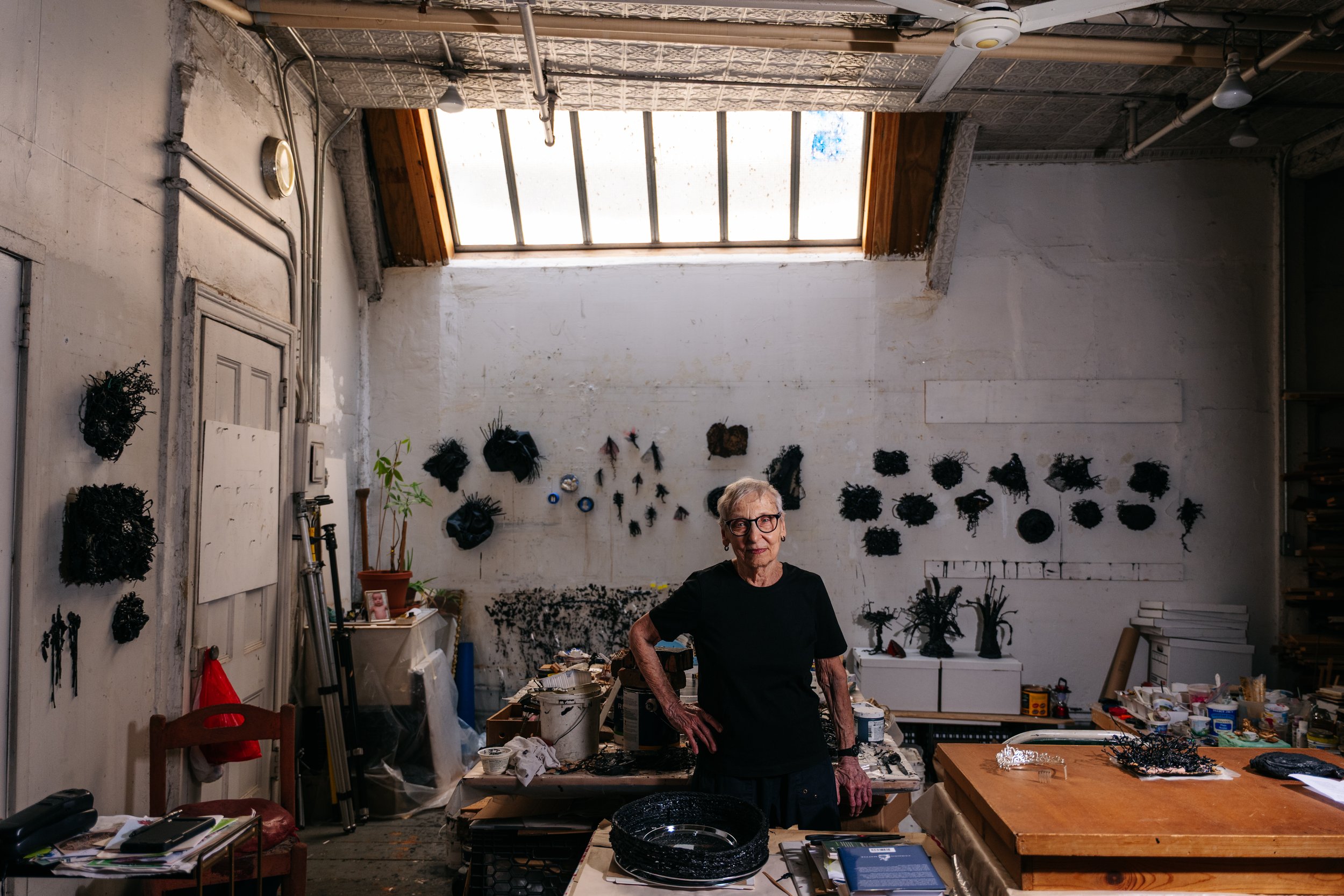
Gilda Pervin in her studio, portrait by Joshua Charow.
The portrait of Gilda that accompanied the exhibition invitation, photographed by Joshua Charow, presents the artist assured and fully in command of her domain, offering a biographical counterpoint to the work on view. Charow’s image captures the essence of her studio — a place of intellect and industry — revealing a life lived in materials, in surfaces, in the discipline of returning day after day. Joshua included a portrait of Gilda in his recent book Loft Law, and the portrait he produced for this exhibition helped bridge her studio world with our gallery space, creating a continuum of place and presence.
Working with Gilda has been an immensely satisfying collaboration. Everything came together with an ease that felt both rare and deeply appreciated. She tracked down works that hadn’t been seen in years, including the monumental 78 × 78-inch drawing Drawn Strips (2019), which commanded the wall facing the gallery entrance with its potent gestural strokes. Though we offered, she wouldn’t leave the physical labor entirely to us. Her studio sits on the top floor of a building with many stairs, yet she insisted on taking part in the packing and moving, wanting to see the work through each stage of its journey. Her presence, steadiness, and willingness to be involved in every aspect of the production helped shape not only the installation but the exhibition’s spirit.
Throughout the run, it was common for visitors to be reluctant to leave. Conversations began, of course, with the work — the materials, the cement and wire, the found objects transformed by blackness — but inevitably broadened into reflections on time and memory. People spoke about family histories, childhood encounters with surface and texture and their own memories and experiences. Gilda’s work invited that; it slowed people down.
One sculpture in particular, Wired 3, held a kind of gravitational pull. Relatively large at 18 × 13 × 7 inches and incredibly dense, made of Portland cement, sand, acrylic paint, pigment, and wire on wood, it drew people in from every angle. Mysterious and forest-like, it beckoned viewers to circle it, and lean in. There was something primordial about it — a form that could be ancient or entirely contemporary, depending on where one stood.
The small drawings surprised and captivated visitors as well. Most measure only 6 × 4 inches, with deckled edges that unintentionally echo old photographs. When Gilda told us she thinks of them as “snapshots,” it felt exactly right: they hold a moment that appears both intimate and broadly familiar, as though recovered from a collective visual memory.
As the exhibition comes to a close, we’re reminded of something Gilda said early in our conversations: “The visual and tactile experiences of artists as children are often reflected in their work.”
Perhaps that’s why these works, with their dense materiality and mystery, felt so alive in the shifting winter light. They are built not just from cement and wire, but from the long memory of a life lived in observation, in touch, in time.